


SPEAK LIKE A TRUE PAISA (From Beginner to Expert)
Hey buddy! I’m so glad you’re finally coming to Medellín. You’re going to love the weather, the mountains, and the vibes, but let me warn you about something: the Spanish you learned on Duolingo? Yeah, throw it out the window.
Here in Medallo (that’s what we locals call Medellín), we speak Paisa. It’s a dialect full of rhythm, exaggerated expressions, and a unique slang called parlache. If you want to blend in and not look like a lost tourist in El Poblado or Laureles, you need to master our vocabulary.
Don’t worry, your local brother has your back. Here is your ultimate guide to Paisa slang, ranked from “easy tourist” to “born in the barrio.”
Level 1: The Basics (You’ll hear these 100 times a day)
These are the words you need just to survive your first morning getting a coffee. They are friendly, essential, and universally used.
- Parce / Parcero (Friend, bro, dude): This is our national word. You can use it with a taxi driver, a bartender, or your friends.
- Example: “¡Qué más, parce!” (What’s up, bro!)
- ¡Qué chimba! (How cool! / Awesome!): If you see a beautiful view from the Metrocable or try a delicious empanada, say this.
- Example: “Medellín es una chimba.” (Medellín is awesome.)
- Paisa (A person from this region): That’s us! People from Medellín and the surrounding coffee region are Paisas.
- Rumba / Rumbear (The party / To party): We don’t “ir de fiesta”—we go de rumba.
Level 2: Everyday Conversational (Now you’re blending in)
Once you have the basics down, start dropping these into casual conversations to show you’re actually paying attention to the locals.
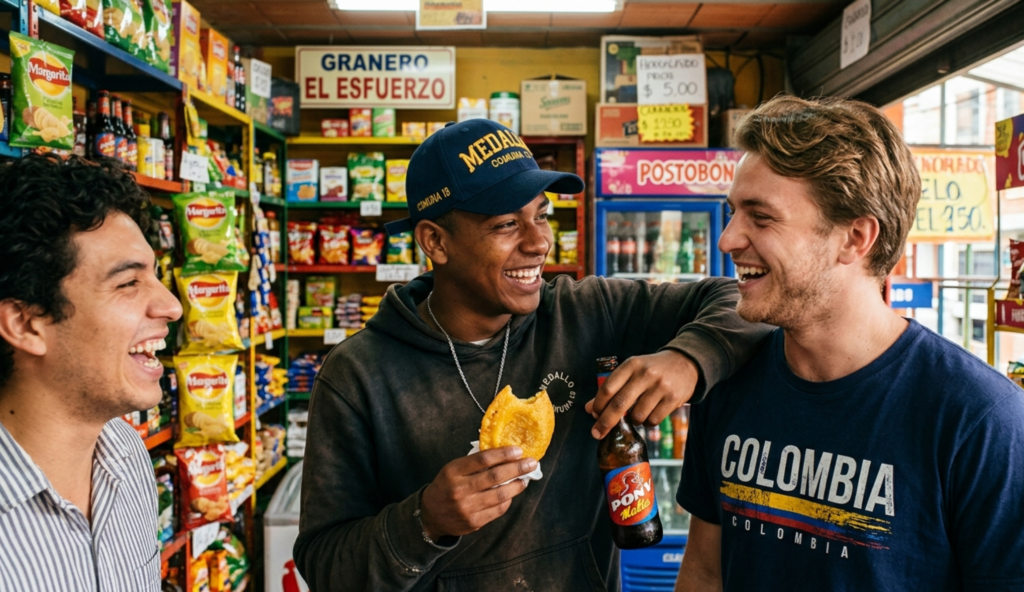
- Parchar (To hang out): Chilling with friends with no fixed plan. The group of friends itself is called a parche.
- Example: “Vamos a parchar al Parque del Poblado.” (Let’s go hang out at Poblado Park.)
- Charro (Funny or weird): In other countries, this means a Mexican cowboy. For us, if a joke or situation is funny, it’s charro.
- Example: “Ese chiste estuvo muy charro.” (That joke was really funny.)
- Chicharrón (A big problem / A mess): Literally, it’s delicious fried pork belly. In daily life, it means a massive headache of a situation.
- Example: “Tengo un chicharrón gigante en el trabajo.” (I have a massive mess to fix at work.)

Level 3: Advanced Paisa (The “Wait, how do you know that word?” level)
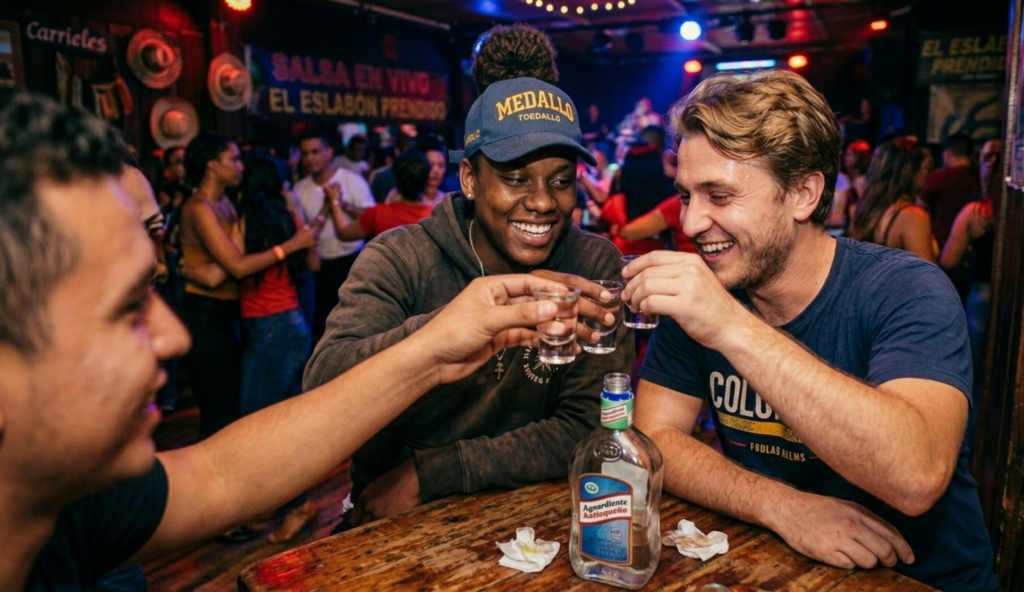
If you use these correctly, the locals will immediately offer you a shot of Aguardiente Antioqueño because they’ll be so impressed.
- Gorrero (A freeloader): That person who always goes to the party and drinks everyone else’s alcohol, but never brings a single beer. Don’t be a gorrero, parce.
- Prendido (Tipsy): You aren’t drunk (borracho) yet, but the music is sounding better and you’re ready to dance.
- Azarado (Scared, anxious, or worried): Feeling stressed or nervous about a situation.
- Example: “No se azare, todo va a estar bien.” (Don’t stress out, everything is going to be fine.)
- Visaje (Showing off or acting suspicious): “Dar visaje” means to draw unwanted attention to yourself (like holding an expensive iPhone in a sketchy neighborhood).
- Example: “No dé visaje.” (Keep a low profile / Don’t flash your valuables.)
Level 4: Master Level (The Barrio Vocabulary)
This is deep parlache. It originated in the tougher neighborhoods of the city decades ago, but today, almost every young local uses it ironically or casually. Use these with caution and a smile!
- Pailas (Too bad / You’re out of luck): Used when things don’t go your way. If you arrive late to the restaurant and they ran out of mondongo soup: pailas.
- Sisas / Nocas (Yes / No): The slang versions of sí y no.
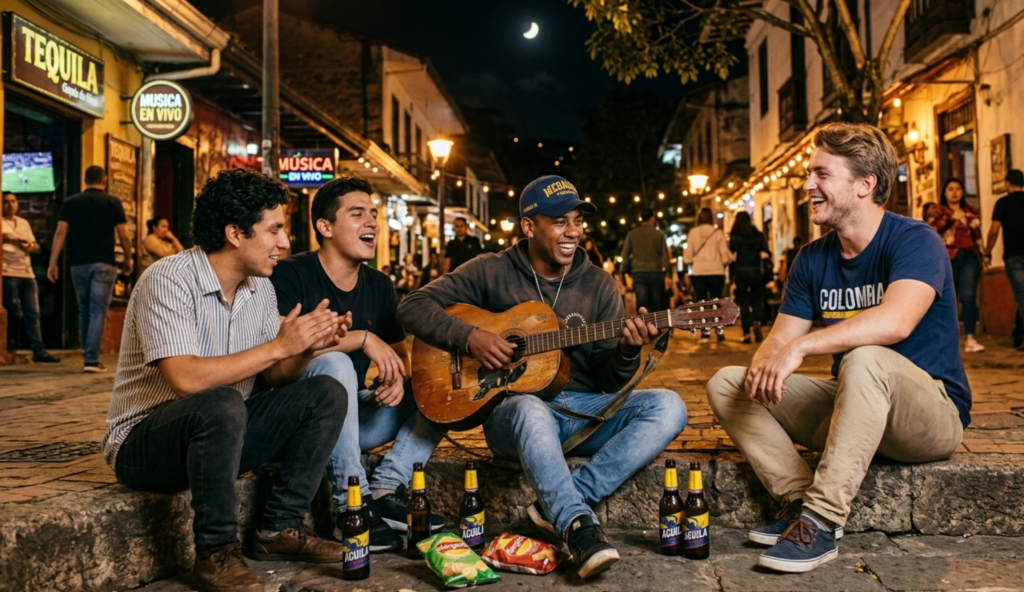
- Example: “¿Vamos por unas polas (beers)? —¡Sisas!” (Should we grab some beers? —Yes!)
- Azotar baldosa (To dance a lot): Literally translates to “to whip the floor tile.” It’s used when you dance salsa or reggaeton so hard that you are practically sweeping the floor with your shoes.
- Gonorrea (Wow / Intense / Terrible / Awesome): Warning: This is technically a disease and can be a highly offensive insult. However, among close friends, it’s used for everything. If a situation is incredibly bad, it’s a gonorrea. If a roller coaster is terrifyingly fast, it’s a gonorrea. Use this only if you are 100% comfortable with the group!
- My Local AdvicePaisas are incredibly warm and proud of our culture. If you try to use even just one or two of these words, people will open their doors to you. Just say “¿Qué más, parce?” with a smile, and you’re officially one of us.Pack your bags, get ready for some bandeja paisa, and I’ll see you when you land at Rionegro airport! ¡Chao pues!
Want to Sound Like a Real Paisa? Download our free guide with 100 essential Paisa words and expressions you'll actually hear in Medellín.
(Click here to sign up and download your guide)